How to Organize a Small Closet Without Buying More Storage
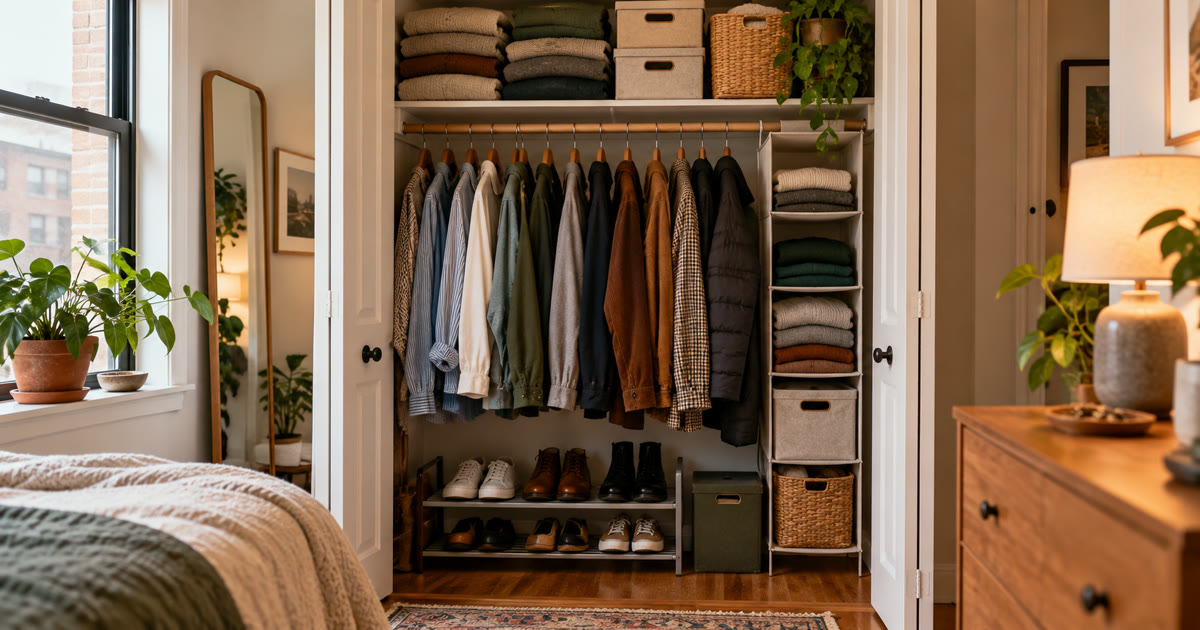
A small closet has a limited amount of space, so an organizer only helps when it solves a specific space problem. Buying boxes before you know what must fit can make the closet more crowded. Start by identifying what you need to reach every day, what can live elsewhere, and which dimensions actually constrain you. The aim is a closet you can use on a rushed morning, not one that looks perfect only in a photograph.
Define the closet's job
Write down what the closet currently holds: everyday clothes, seasonal layers, shoes, linens, bags, or household items. Mark which categories belong there because you need them frequently. A small closet cannot do every job equally well; moving a rarely used suitcase or off-season bedding to another safe storage spot may free more useful room than installing a second shelf.
If there is no alternative storage, that is a real constraint. Plan zones rather than treating the contents as clutter. Keep daily clothes at eye or hand level, occasional items above or below, and delicate or heavy items where they will not fall or get crushed. Accessibility matters for children and anyone with limited reach or mobility; the best layout is one the actual user can maintain.
Measure before moving or buying
Measure the usable width, depth, and height, including the door swing and any sloping ceiling. Note the location of the hanging rod, shelves, and obstacles. Then measure what you want to store: the height of coats, the depth of shoes, and the width of folded stacks. A narrow door can prevent you from reaching a shelf that technically fits inside the closet.
Take one photo of the empty or partly emptied space. You can sketch three zones directly on the image: hanging, folded, and small items. This is more reliable than choosing a product from a picture of a different closet. If you later buy a bin, check its outside dimensions and leave room to pull it out.
For example, if a rail has 36 inches of usable width, measure the garments currently hanging there before buying a second rod. If a shelf is 12 inches deep, a 13-inch-deep box will overhang even if its advertised width fits. These are sample measurements, not standard closet sizes; use your own measurements for purchases.
Sort without a dramatic purge
Remove one category at a time, starting with the shelf or rail causing the most friction. Put regularly worn pieces together, set aside items that need repair or laundering, and separate anything that no longer fits your current needs. You do not have to empty the entire closet at once. A 20-minute category session may be easier to finish than a day-long overhaul.
Ask practical questions: Did I wear this in the relevant season? Does it fit comfortably? Is it usable as it is? If an item has sentimental value, give it a deliberate storage spot rather than forcing a decision during a cleanup session. If you discover clothes you repeatedly avoid, the personal style guide may help clarify why they are not part of your real rotation.
Give each category an easy return path
Place the most-used items where you can return them with one motion. Hang shirts together if that makes outfit selection easier. Fold bulky sweaters if hanging distorts them. Put small items in one visible drawer, tray, or container rather than several identical hidden boxes. Labels help only when a household will use them; a transparent container may be enough.
Use the back of the door or an unused vertical area only if it will not block access. An over-door organizer can solve a shoe or accessory problem, but check door clearance and weight limits first. A second hanging rod helps if most garments are short; it will not help a closet full of long dresses and coats. Match the device to the contents.
Test the layout for one week
Live with the new arrangement before buying storage products. Notice where clothes accumulate outside the closet. A pile on a chair may signal that the return path is too complicated, not that you need stricter discipline. If one drawer jams every morning, reduce its contents or change the category. If the top shelf becomes a forgotten zone, reserve it for seasonal items and add a dated note or reminder.
Try preparing two outfits using the new layout. Can you see the pieces that go together? If coordinating colors is a recurring problem, the color palette guide offers a way to identify clothes that work across several outfits. Organization should make the wardrobe visible enough to use, not merely packed efficiently.
Buy only for a measured gap
After the trial, name the problem precisely: “five pairs of shoes need a reachable home” or “folded knits collapse when stacked.” Then choose a solution that fits the measured space and your budget. A simple divider, repaired shelf, matching stack depth, or relocated category may solve it. Avoid buying a full matching system because one shelf looks untidy.
Repeat a five-minute reset on laundry day. Put clean items in their designated zones, return out-of-place accessories, and note anything that no longer earns its space. A small closet can stay useful without staying photo-ready; success is finding and returning what you need with little friction.