How to Make an Interior Design Mood Board That Guides Decisions
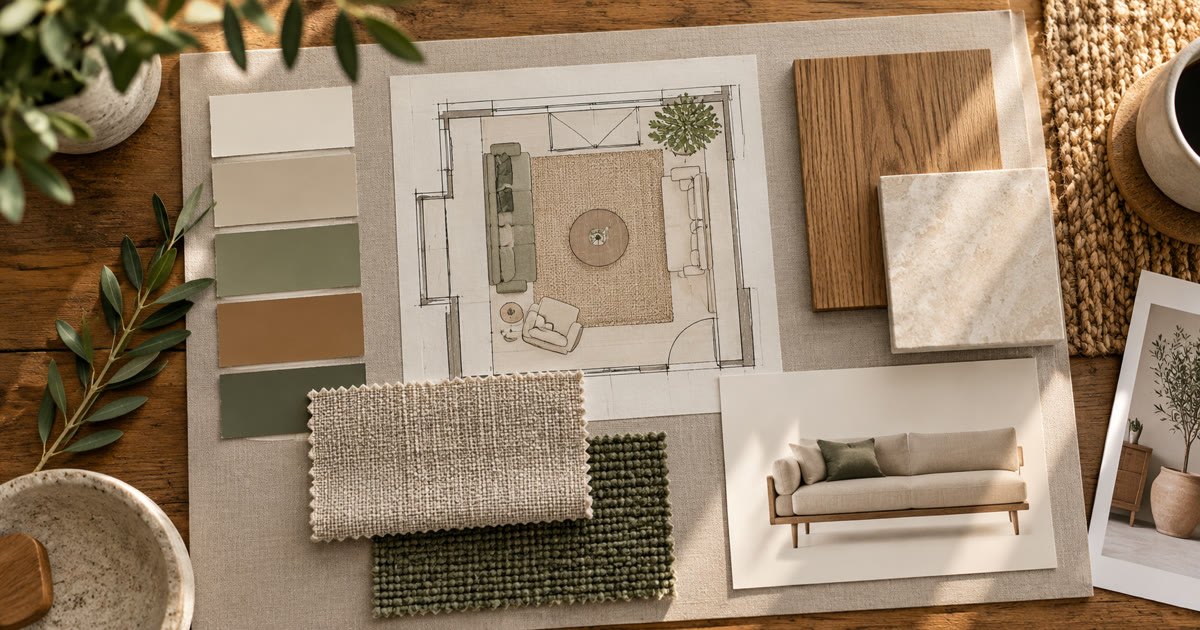
A mood board is useful when it helps you choose among real options for a room. A collage of appealing interiors can show a feeling, but it cannot tell you whether a sofa fits, a paint color works in your light, or the plan stays within budget. Build a board around one room and one decision. You can use a free digital canvas, a slide, or paper; the method matters more than the tool.
Write a one-sentence room brief
Describe what the room must do and what is difficult about it. For example: “A small living room needs seating for three, a place to read, and a clear walkway to the balcony.” Add a budget range and any items that must stay. This short brief stops attractive images from becoming accidental requirements.
Photograph the room in daylight and evening light. Measure the walls, windows, doors, and major existing furniture. Record outlets, radiators, and traffic paths. Your board should contain these constraints alongside inspiration, because the room is not an empty showroom. If you rent, note what you can and cannot change before collecting ideas that depend on construction. If you are unsure which room direction to explore, the interior style quiz can give you a starting point, not a specification.
Gather fewer, more specific references
Choose three to five images that illustrate particular decisions. Label what you like in each: “warm wall color,” “low shelving,” or “soft lamp light.” Avoid saving an image only because the entire room looks beautiful. A room photographed with high ceilings and huge windows may not translate directly to yours, but one material combination could.
Add a photo of an existing item you want to keep. This grounds the board in your real starting point. You may also add a rough sketch or floor plan. The goal is not to imitate someone else's room; it is to understand which visual choices serve your brief.
Make a small color and material palette
Select one background color, one or two supporting colors, and a material or texture direction. These are working choices, not laws. Put actual paint chips or fabric samples next to room photos whenever possible. Screen colors can shift across devices and lighting. If you cannot obtain samples yet, mark the color as provisional rather than treating the image as a specification.
Consider how the choices connect to furniture you already own. A wood tone, rug, and wall color will interact in the same room; testing them together is more valuable than evaluating each in isolation. The interior design style guide can help you compare visual directions, but your own room's light should decide the final paint or fabric.
Add measurements and budget beside the images
For every potential purchase, record width, depth, height, approximate price, and the space it will occupy. A mood board becomes a decision tool when a beautiful object must survive these checks. Use a simple table with columns for item, function, measurements, cost, and status: keep, investigate, or reject.
Leave clearance for doors, walking paths, and daily use. If a desk technically fits but blocks the only route through the room, it fails the brief. Likewise, a chair that works visually but cannot be cleaned within your routine may not be right for you. Materials have upkeep costs as well as purchase costs.
A filled example for a small living room
Imagine a 10-by-12-foot living room with a balcony door on the long wall and an existing 72-inch sofa that must stay. The brief is seating for three, a reading light, and an unobstructed route to the balcony, with a $500 limit for new items. On the board, place a photo of the actual sofa beside two warm off-white paint samples, an olive fabric swatch, a rough floor sketch showing the door swing, and a photo of a slim floor lamp. This is a hypothetical example, not a shopping list for every room.
| Option | Function and fit check | Estimated cost for this example | Decision |
|---|---|---|---|
| Existing 72-inch sofa | Seats two; measure its depth and keep it | $0 | Keep |
| Slim floor lamp | Reading light; check outlet position and walkway clearance | $90 | Investigate |
| 30-inch armchair | Third seat; test a taped floor outline before buying | $250 | Investigate |
| Large second sofa | Adds seats but likely blocks the balcony route | $450 | Reject |
The prices are illustrative planning numbers, not current retailer quotes. Check measurements, sample colors in your own light, and verify live prices before purchasing. A board that records why an option was rejected is more useful than one that only shows attractive objects.
Compare two directions instead of collecting forever
If you have many ideas, make two small boards for the same room rather than one oversized collage. One could use light walls and dark accents; another could use deeper walls and warmer textiles. Compare both against the brief: function, cost, maintenance, light, and the items you already own. Identify the one change that would make the most difference before planning a total transformation.
This method also makes collaboration easier. Instead of asking someone whether they “like the board,” ask whether a specific option meets the room's needs. If you share the room, have each person mark one nonnegotiable and one flexible preference. Mood boards should support a conversation, not settle it by aesthetic vote.
Turn the board into a sequence
Before buying, list the actions in a safe order: verify measurements; test paint or fabric samples; decide which existing pieces stay; price the major purchase; and only then choose smaller details. A board can remain useful after the first purchase if you update it when real materials differ from photos. Keep rejected options visible in a separate section so you do not revisit the same mistake.
The finished board should answer four questions: What is the room for? Which look supports that use? Will the chosen objects fit? What is the next low-risk test? If it can answer those questions, it is doing more than decorating a page.